A roof colour decision is easier when it starts with the house that exists today. Brickwork, windows, paving, neighbouring surfaces and the shape of the roof all affect what you will see after painting. A small square on a phone cannot show those relationships reliably. Before choosing a fashionable charcoal or a warm neutral, decide which surrounding materials will stay and which are actually included in your renovation.
For a Geelong home, the useful question is not which colour is universally best. It is which finish can be applied to this roof, looks acceptable from the places you use, and is recorded clearly enough that the contractor can supply what you approved. This guide concerns colour selection and approval. It does not treat a new colour as evidence that damaged tiles, failed flashings or an unsuitable old coating have been repaired.
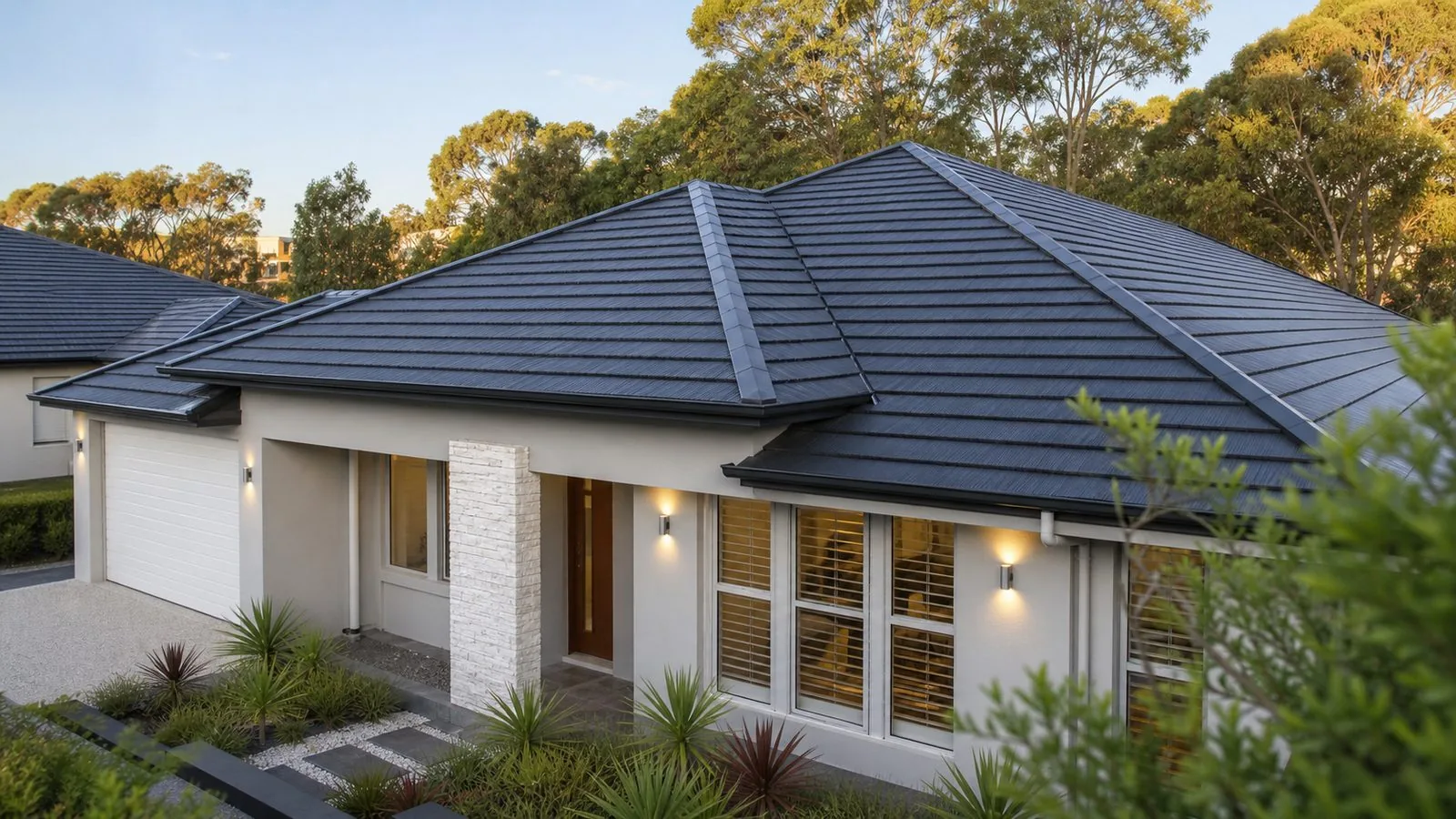
Start with the materials that will stay
Make a simple list of the surfaces you cannot easily change. These might include red brick, cream mortar, aluminium window frames, a stone feature wall and a garage door. Put proposed changes in a separate column. A roof chosen to match a future rendered facade can look quite different if the rendering is delayed indefinitely. Choose against committed work rather than an imagined final renovation with no schedule or agreed scope.
Look at undertones as well as the broad colour name. Two finishes called grey can lean towards green, blue, brown or violet when placed next to the same brick. There is no need to become a colour specialist to notice this. Compare physical samples beside the permanent materials from a safe ground-level position. Note which combinations feel consistent and which make an existing surface look unexpectedly yellow or pink.
Include less obvious elements such as water tanks, carports, fence caps and visible downpipes. They do not all need to match, but they should be deliberate. A roof can relate to the window frames while the gutters relate to the fascia. Write down that intention. Otherwise a short instruction such as “make everything charcoal” can accidentally include elements that were meant to remain lighter.
Judge colour across the roof geometry
Roof shape changes the apparent colour. A steep street-facing plane can occupy much of the view of a house, while a shallow roof may appear mainly as a narrow band. Ridges, hips and tile ribs create shadows. A flat sample on a kitchen table does not reproduce those shadows or the angle of the roof to the sky. Treat it as a colour reference, not a miniature prediction of the finished building.
Choose a few ordinary viewing positions: the front gate, the opposite footpath where public access is safe, a rear seating area and an upper window inside the house if available. Take photographs without stepping into traffic or accessing neighbouring property. Record which slopes dominate each view. This helps distinguish a colour issue from a geometry issue, such as a large garage roof visually overwhelming the front entrance.
A textured concrete tile and a smoother tile may show the same coating differently. Ask how the proposed product will look over the actual profile and existing repairs. A photograph of a flat metal roof cannot demonstrate the appearance of that colour over deep tile channels. Likewise, a heavily edited marketing image cannot settle whether the finish will look too glossy on a particular afternoon.
Use physical samples with a clear method
Shortlist a small number of credible options before asking for samples. Too many similar alternatives make comparison harder because the eye keeps adjusting to the previous choice. Place the samples together with a reference for your main wall colour and trim. Review them in daylight and shade, then note the result in plain language: too blue beside the brick, acceptable with the windows, or too close to the gutter colour without actually matching it.
Ask whether a sample represents the exact proposed coating product, finish and colour formula. A decorative wall paint sample with a similar name may be useful for an early conversation but is not necessarily an approval sample for a roof coating. The applicator should explain what a representative sample can demonstrate and what will vary because of texture, coverage, viewing angle or the existing substrate.
Do not climb onto the roof to position samples or test paint yourself. Agree how the contractor will provide a safe, representative comparison, potentially using a suitable spare tile or prepared sample board. Label each sample and photograph the label with it. A later image of three unlabelled grey tiles is surprisingly unhelpful when the order must be confirmed.
Separate roof colour from gutter and fascia colour
A roof painting quote should distinguish the roof covering from gutters, fascia, downpipes, exposed flashing and other visible trim. These surfaces can have different existing finishes and preparation requirements. It should be clear whether they are being painted, replaced or left alone. A colour discussion is not a substitute for those separate work descriptions, especially when some elements have corrosion or failing old paint.
Matching an existing gutter exactly may be difficult if the original finish has weathered. Choosing a colour from the same named range does not prove the new roof will match an aged gutter in every light. Compare against the physical gutter appearance from the ground and discuss whether a deliberate contrast would be more satisfactory than a near-match. Avoid treating a printed colour name as a guarantee of visual identity.
Consider where downpipes sit against the walls. A dark pipe can emphasise an architectural line or draw attention to a location you would prefer to recede. If the roof is changing but the pipes are staying, include them in the sample assessment. Small trim decisions can have a disproportionate effect on the finished view because they form sharp boundaries between larger areas of colour.
Ask product questions without assuming energy savings
Colour and roof-coating product are separate decisions that influence one another. Establish which coating system is suitable for the roof before assuming every colour in a decorative paint catalogue is available. Ask for the exact product, its intended substrate and the manufacturer's current colour options. If the existing coating is peeling, the preparation and compatibility questions in our peeling roof paint guide need resolution before appearance is approved.
Dulux's roof-colour guidance identifies solar absorptance as a product-related consideration and recommends testing colours on site. If thermal performance matters to you, request the published information for the exact proposed colour and coating. Do not accept a promised indoor temperature drop or bill saving based only on the words light colour, reflective or cool roof. A finish selection does not describe the whole building.
Keep appearance and performance preferences in separate notes. You might prefer a darker visual treatment but want to understand the alternatives before committing. The contractor can then show the available product data and explain the proposal without converting your preference into an unsupported result. There is no reason to make a household energy prediction as part of an ordinary colour approval.
Plan repairs before judging the finish
A fresh coating can make a repaired roof look more consistent, but it cannot make mismatched tile profiles fit or remove every difference in texture. If replacement tiles are needed, ask the roofer to identify them before the final sample decision. A different profile creates a physical shadow line even when painted the same colour. Our replacement tile guide explains why shape and fit take priority over colour.
Ask which repaired areas are likely to remain perceptible from normal viewing positions. Repointed ridge joints, replacement flashings and older textured tiles may reflect light differently. An honest sample discussion should set expectations for those transitions without describing every difference as a defect. The important distinction is between an agreed characteristic of the existing roof and work that does not match the written specification.
If only part of the roof is being painted, establish the boundary deliberately. A junction hidden behind a ridge may read differently from a colour change halfway across an exposed plane. Ask for a marked photograph showing exactly where work stops. That is more useful than a phrase such as front section, particularly when several roof slopes are visible from the street.
Worked example: a warm brick home with dark windows
Consider a hypothetical home with orange-brown brick, dark window frames, cream fascia and a faded grey tile roof. The owner initially chooses a blue-grey roof from a screen image. Physical samples beside the brick make the blue undertone more apparent than expected. A warmer grey sits more comfortably with the masonry, but looks almost identical to the existing gutters without being a true match.
The owner and contractor then compare two complete options. One retains the existing gutters and uses a deliberate roof contrast. The other includes separately scoped gutter preparation and repainting, with the fascia remaining cream. Neither option is inherently correct. They differ in visual effect, work scope and the number of surfaces needing preparation. The decision becomes manageable once the options describe whole combinations instead of isolated paint names.
Before approval, the contractor provides a representative sample in the selected roof product and records which trims are excluded. The owner reviews it from the driveway and rear garden in ordinary daylight. This is an example of a decision process, not a completed Geelong customer job. Its useful lesson is to resolve the relationships between surfaces before ordering the coating, rather than relying on the initial screen impression.
Record approval and retain the specification
The final approval should name the coating manufacturer, product, colour name, colour code where supplied, and intended finish. It should identify the roof areas covered and any separately treated trims. If a physical sample was approved, record its label and approval date. Where more than one person is involved in choosing, nominate who provides the final written instruction so conflicting messages do not reach the applicator.
Ask how a proposed substitution will be handled if the chosen product or tint is unavailable. A similar colour from another system is a new decision, not an administrative detail. The replacement needs to remain suitable for the substrate and should be approved before application. Keep the conversation focused on the actual substitute rather than a verbal assurance that nobody will notice a difference.
At handover, retain the product information and photographs of the finished roof from the same safe viewing positions used during selection. These records help future maintenance discussions and reduce uncertainty over which finish was used. A later touch-up may still look different because the surrounding coating has aged. Having the correct specification makes that conversation more precise; it does not promise that an old and new surface will always be visually identical.
Build your colour approval brief
Select the decisions you have documented. The remaining items identify what to resolve before materials are ordered.
Mark the colour decisions already recorded.
Reference material
Colour-reference links reviewed on 22 September 2026; use a physical sample for approval.